Dec 25, 2025
Content
The Ultimate Guide to Website Support in 2026
Did you know that by 2026, users expect websites to load in under two seconds, and nearly 70% will leave if a site is down? For businesses, even a brief outage or slow performance can mean lost revenue and damaged reputation. When website support falls short, the risks are real and immediate.
This guide offers a clear, step-by-step roadmap to help you master website support in 2026. You will learn how support has evolved, what features matter most, how to pick the right provider, and which best practices drive success. Ready to future-proof your site? Read on for actionable strategies and expert insights.
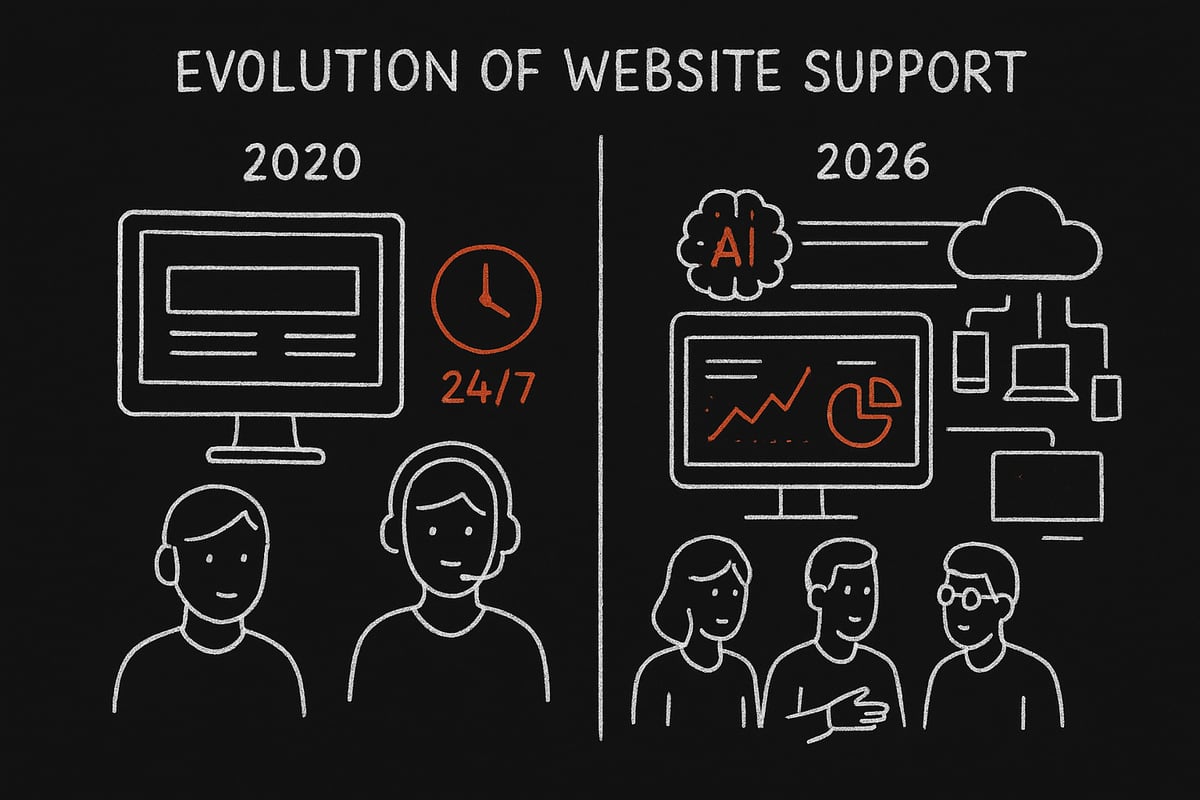
The Evolution of Website Support: 2020–2026
The landscape of website support has transformed dramatically between 2020 and 2026. Businesses have moved from basic, reactive fixes to comprehensive, always-on strategies. This evolution responds to changing user expectations and the rapid pace of digital innovation.
Changing Business Needs and User Expectations
Over the past six years, businesses have shifted from static brochure sites to dynamic, interactive platforms powered by AI. This change has led to a surge in user expectations. Today, users demand 24/7 uptime, rapid load times, and smooth, responsive experiences on every device.
Competitor analysis shows that 24/7 website support is now a standard offering among leading agencies. University and enterprise clients, in particular, require continuous monitoring and rapid incident response to avoid costly downtime. As digital experiences become more complex, the need for reliable website support grows. Companies that fail to meet these rising standards risk losing trust and business to more agile competitors.
Technological Advancements Shaping Support
The backbone of website support has been reshaped by technology. Cloud hosting, containerization, and serverless architectures have changed how sites are built and maintained. AI-powered monitoring tools now oversee routine maintenance, identifying and resolving issues before they impact users.
Automation is taking center stage. Leading agencies use advanced analytics to detect performance problems and security vulnerabilities early. For example, AI-driven platforms can automatically fix security flaws and optimize site speed. To explore how AI is transforming support, see AI-Powered Hosting & Automation. These innovations allow website support teams to focus on strategic improvements, while automation handles repetitive tasks.
The Expanding Scope of Website Support
Modern website support now covers far more than just technical troubleshooting. Providers integrate SEO, UX, accessibility, and compliance as part of their core offerings. Routine content updates, plugin and theme management, and ensuring cross-platform compatibility are standard.
Outsourcing is also on the rise. Over 90 percent of mid-to-large businesses now rely on external partners for at least some aspect of website support, according to competitor testimonials. For instance, a retail company recently added e-commerce features and benefited from ongoing website support to keep everything running smoothly. As digital ecosystems become more complex, comprehensive website support is essential for maintaining performance, security, and business growth.
Core Components of Modern Website Support
Modern website support is no longer a set-and-forget service. It is a robust, multi-layered approach that ensures business continuity, security, and digital growth. To stay competitive in 2026, organizations must prioritize a comprehensive support strategy.

24/7 Monitoring and Incident Response
Round-the-clock monitoring is the backbone of effective website support. Real-time surveillance tools track uptime, security threats, and performance metrics, ensuring that any disruption is detected instantly.
When incidents occur, established emergency protocols kick in. Service Level Agreements (SLAs) define response times, escalation paths, and communication standards. Leading agencies provide guaranteed response times for critical issues, sometimes within minutes.
A typical table for incident response might look like this:
Support Feature | Standard Plan | Premium Plan |
|---|---|---|
Uptime Monitoring | 24/7 | 24/7 |
Response Time | 1 hour | 15 minutes |
Communication | Phone, Chat |
With 24/7 uptime monitoring now a core feature, website support helps businesses minimize downtime and maintain user trust. This proactive approach is essential for organizations handling high-traffic or mission-critical sites.
Maintenance, Updates, and Optimization
Ongoing maintenance is vital for secure and high-performing websites. Website support includes routine updates to your CMS, plugins, and themes, reducing vulnerabilities and ensuring compatibility.
Performance optimization is another pillar. Tasks like caching, image compression, and code minification keep load times fast and user experiences smooth. Human-vetted updates are often preferred over automated or bot-driven updates for reliability, as seen in industry comparison tables.
Hourly or daily backups and hack-fix guarantees provide peace of mind. For a deeper dive, explore these Website Maintenance Best Practices that form the core of modern website support.
Security and Compliance
Security threats are evolving rapidly in 2026. Website support must address malware, DDoS attacks, and increasingly strict data privacy regulations. Security hardening includes SSL certificates, firewalls, malware scanning, and prompt patch management.
Compliance is just as important. ADA, GDPR, and new global standards require continuous vigilance. Providers now offer security optimization as a standard feature, ensuring your website stays protected and compliant.
A robust security and compliance workflow is a non-negotiable aspect of website support, particularly for businesses managing sensitive data or operating in regulated industries.
Content and Design Support
Content and design are not static. Modern website support includes on-demand content edits, new page creation, and multimedia integration. Design tweaks and branding updates keep your site fresh and aligned with your business goals.
Premium support plans may offer unlimited edits and ongoing development, setting them apart in the marketplace. Client testimonials often highlight seamless content updates and rapid turnaround, which are essential for agile marketing and communication strategies.
With website support covering both technical and creative needs, organizations can focus on innovation while their digital presence remains current and engaging.
Analytics, Reporting, and Continuous Improvement
Continuous improvement is possible only with actionable data. Website support services now include ongoing tracking of traffic, conversions, and user behaviors. Regular reports inform business decisions and highlight opportunities for website enhancements.
Many providers use AI and automation to deliver custom dashboards and monthly optimization reports. These tools turn raw data into insights, driving performance gains and ensuring websites stay ahead of user expectations.
By embedding analytics and reporting into website support, businesses can measure the impact of their investment and refine their digital strategy for optimal results.
How to Choose the Right Website Support Provider in 2026
Selecting the ideal website support provider in 2026 requires careful evaluation. Businesses must align their support needs with providers who can deliver reliability, expertise, and scalability. The following steps will guide you through the most important considerations.

Assessing Your Needs and Budget
Begin by clearly defining what you expect from website support. Are uptime, security, or scalability your top goals? Consider the complexity of your website, including platform, integrations, and expected traffic.
Budget is another crucial factor. Providers typically offer monthly, annual, or retainer-based plans. To help, here's a comparison of typical support plan tiers:
Plan Tier | Price (Monthly) | Key Features |
|---|---|---|
Basic | $99 | Monitoring, updates |
Standard | $299 | Security, analytics, backups |
Premium | $599 | Dedicated support, custom dev |
Assessing these options will help you match your business needs with the right level of website support.
Evaluating Provider Expertise and Services
Choosing a provider with the right expertise is essential for quality website support. Look for teams with specialized skills, such as developers, designers, and project managers. Experience with your CMS, integrations, and industry will ensure smooth operations.
Examine portfolios and partnerships for proof of capability. For further guidance on what to look for in a partner, explore this resource on Choosing a Web Development Provider.
By focusing on proven expertise, you can ensure your website support provider is equipped to handle your specific requirements.
Service Level Agreements (SLAs) and Guarantees
A trustworthy website support provider will offer clear SLAs that define response times, resolution targets, and uptime commitments. These agreements protect your business and set expectations for service quality.
Look for guarantees such as hack-fix coverage and human-tested updates. These features demonstrate a provider’s commitment to reliability and security. Case studies and testimonials that mention fast turnaround times can also be valuable indicators.
By prioritizing SLAs, you can confidently choose a website support partner who stands behind their promises.
Support Channels and Communication
Effective communication is a cornerstone of reliable website support. Evaluate whether providers offer 24/7 live chat, ticketing systems, phone support, or dedicated account managers.
Transparency and proactive communication should be standard. Premium plans may include dedicated task boards and scheduled calls, which streamline collaboration and issue resolution.
Selecting a provider with robust communication channels ensures you receive timely updates and support whenever you need it.
Best Practices for Effective Website Support Management
Effective website support management in 2026 is about more than just quick fixes. It requires a proactive, well-documented, and collaborative approach. Businesses that excel in website support follow proven strategies to keep their sites secure, high-performing, and aligned with business goals.

Proactive Maintenance and Monitoring
Proactive maintenance is the cornerstone of reliable website support. Scheduling regular updates for your CMS, plugins, and security patches prevents vulnerabilities before they become threats. Automated monitoring tools alert teams instantly to downtime or suspicious activity, enabling emergency response protocols to be triggered without delay.
Schedule updates weekly or monthly
Use automated uptime and security monitoring
Respond to alerts with predefined escalation paths
With website support, anticipating issues is far more cost-effective than reacting to emergencies.
Documentation and Knowledge Sharing
Clear documentation is essential for effective website support. Maintain detailed records of your website’s architecture, custom code, and key integrations. This knowledge base ensures continuity when team members change and streamlines onboarding for new support providers.
Document plugins, integrations, and workflows
Share access credentials securely
Update documentation after every major change
A robust documentation process makes website support more efficient and minimizes disruptions during handovers.
Continuous Performance and UX Optimization
Continuous improvement is at the heart of website support. Regular UX audits and performance reviews identify areas to optimize for speed, accessibility, and SEO. Leveraging insights from UX Design in Web Support can help you align user experience with business objectives.
Conduct A/B testing for design updates
Optimize images and code for faster load times
Review analytics for user behavior trends
Integrating UX and performance optimization into website support maximizes both user satisfaction and business results.
Collaboration Between Stakeholders
Website support thrives on collaboration between marketing, IT, and design teams. Using project management tools, organizations can track support tasks transparently and ensure everyone is aligned with business priorities.
Hold regular cross-team meetings
Use shared dashboards to monitor progress
Assign clear roles and responsibilities
Collaborative workflows make website support more agile and responsive to evolving needs.
Measuring Success: KPIs and ROI
To measure the effectiveness of website support, set clear KPIs such as uptime, page speed, conversion rates, and response times. Regularly review analytics and support reports to identify trends and adjust strategies as needed.
KPI | Target Example |
|---|---|
Uptime | 99.9%+ |
Page Speed | <2 seconds |
Conversion Rate | +10% year over year |
Response Time | <1 hour for critical |
By focusing on measurable outcomes, businesses can ensure their website support delivers strong ROI and continuous improvement.
Future Trends in Website Support: What to Expect Beyond 2026
Looking beyond 2026, website support is set for rapid transformation. Businesses must prepare for emerging technologies and shifting user demands that will redefine how support is delivered.
AI-Driven Automation and Predictive Support
AI is revolutionizing website support through automation and predictive analytics. Intelligent systems now detect issues before they impact users, using self-healing tools and chatbots to deliver instant resolutions.
Key advancements include:
AI-powered monitoring for real-time threat detection
Automated maintenance and updates
Predictive analytics for performance optimization
Agencies increasingly integrate edge computing and AI for enhanced uptime and speed, as discussed in Edge-First Performance & Core Web Vitals 2.0. With these tools, businesses can anticipate and prevent downtime, ensuring reliable website support.
Enhanced Security Protocols and Compliance
The security landscape is growing more complex. Website support must now address quantum threats, deepfake attacks, and stricter privacy laws. Enhanced protocols include automated compliance checks and advanced encryption.
Modern support teams offer:
Continuous vulnerability scanning
Automated incident response
Compliance monitoring for global standards
As regulations evolve, robust website support ensures ongoing protection and peace of mind for businesses and users alike.
Personalization and User-Centric Support
Personalized experiences are at the heart of future website support. AI analyzes user behavior to deliver tailored support, integrating with marketing and CRM systems for seamless service.
Personalization trends include:
Real-time support based on user preferences
Custom dashboards for individual clients
Automated user journey optimization
For deeper insights, explore how AI-Powered Personalization in Web Design is shaping modern website support. This approach drives engagement and satisfaction at every touchpoint.
Seamless Integration with Business Ecosystems
Website support is no longer isolated. It now connects with e-commerce, analytics, and marketing platforms for unified digital management. Agencies provide centralized dashboards for holistic oversight.
Integration features include:
Cross-platform compatibility
Centralized reporting and analytics
Streamlined workflow across business tools
This connected approach empowers businesses to leverage website support as a core part of their digital strategy.
Sustainability and Green Hosting Initiatives
Sustainability is becoming a priority in website support. Agencies are adopting green hosting, using renewable energy and carbon offset programs to minimize environmental impact.
Key sustainability practices:
Eco-friendly data centers
Energy-efficient infrastructure
Transparent reporting on carbon footprint
As demand grows, green website support not only benefits the planet but also enhances brand reputation.
Case Studies and Real-World Examples
Modern website support is defined by real outcomes, not just promises. Let us examine how organizations across sectors leverage website support to achieve reliability, growth, and innovation.
Enterprise Website Support Success Stories
Large institutions require robust website support to maintain mission-critical operations. For example, universities like the University of Minnesota and Cornell University rely on 24/7 monitoring and rapid incident response for their public-facing sites. This ensures that students, faculty, and stakeholders always have access to vital resources.
In healthcare, organizations demand continuous uptime and strict data compliance. Reliable website support minimizes downtime and protects sensitive information, which is crucial for patient trust and regulatory requirements. These case studies illustrate the power of proactive support in minimizing disruptions and safeguarding reputations.
SMB and Agency Partnership Outcomes
Small and medium-sized businesses benefit greatly from expert website support. By outsourcing routine maintenance, updates, and security, they free up internal resources to focus on growth. Agencies often partner with SMBs to provide scalable solutions, from regular content edits to advanced analytics.
Client testimonials frequently cite improved reliability and faster response times as major advantages. Agencies with dedicated support teams address issues quickly, reducing risk and enhancing customer satisfaction. This collaborative approach empowers SMBs to compete with larger enterprises through dependable website support.
E-Commerce and Conversion Optimization
Retailers face unique challenges, such as rapid feature deployment and seamless shopping experiences. Effective website support enables businesses to add new e-commerce tools, roll out seasonal promotions, and guarantee secure transactions.
A retail case study highlights how ongoing support facilitated the integration of WooCommerce and advanced analytics, leading to higher conversion rates. Modern website support often includes Web Design and SEO Integration as part of the package, ensuring every update aligns with search visibility and user experience. This holistic approach drives both sales and brand loyalty.
Lessons Learned and Key Takeaways
Across all sectors, common challenges include unexpected downtime, outdated content, and security breaches. Proactive website support and expert teams help organizations overcome these hurdles with regular updates, real-time monitoring, and rapid incident response.
Key takeaways for 2026 include prioritizing continuous improvement and embracing emerging trends like voice search. Industry leaders recommend exploring Voice Search Optimization Becomes Standard to future-proof your support strategy. Ultimately, investing in comprehensive website support delivers peace of mind, measurable results, and a competitive edge.
As we’ve explored, mastering website support in 2026 means staying ahead of evolving technology, keeping your site secure and accessible, and ensuring your brand stands out online. If you want to take your website’s performance and reliability to the next level, let’s talk about how you can put these strategies into action. Together, we can clarify your goals and create a tailored plan that fits your unique needs. Ready for expert advice and practical solutions? Book a free strategy call and let’s build a web presence you can trust—today and into the future.

Nik Paprocki
Director of Digital Strategy at WebSuitable
[ Blog ]