Dec 15, 2025
Content
Marketing And Creative Guide: Strategies For 2026 Success
In 2026, brands are facing unprecedented levels of digital noise, making it harder than ever to capture audience attention. Standing out requires more than just traditional tactics.
The intersection of marketing and creative strategy is now the key driver of measurable success. Businesses must blend creativity, data, and technology to build campaigns that truly resonate.
This guide explores the latest trends, step-by-step frameworks, essential tools, and inspiring real-world examples. You will discover actionable strategies designed to future-proof your brand for the year ahead.
Ready to transform your marketing and creative approach? Dive in and set your brand on a path to lasting growth.
The Evolving Marketing & Creative Landscape in 2026
The marketing and creative landscape in 2026 is transforming rapidly, shaped by technological advancements, shifting consumer behaviors, and the need for authentic connections. Brands that understand these changes will be best positioned to lead.

Key Shifts in Consumer Behavior and Expectations
In 2026, consumers demand hyper-personalized experiences and instant value. Attention spans are shorter, making relevance and speed critical for marketing and creative campaigns. Authentic, purpose-driven brands now win loyalty, as customers seek meaning in their interactions.
82% of creative firms say digital transformation boosts engagement (Bannerflow).
Real-time data use enables brands to tailor content on demand.
Consumers expect brands to align with their values and provide genuine experiences.
Brands that respond with agility and insight are set to thrive.
Technology’s Impact on Creativity and Marketing
Technology is now central to marketing and creative innovation. AI powers content creation, campaign optimization, and seamless automation. Immersive experiences like AR and VR are mainstream, captivating audiences in new ways. AI search is vital for brand discovery.
AI-driven creative tools enable teams to develop, test, and adapt campaigns at scale. For a deeper dive into these advances and their impact, explore Kantar's 2026 Marketing Trends.
Interactive content and automation free teams to focus on strategy and originality.
Omnichannel and Cross-Platform Engagement
A unified brand presence across web, mobile, and emerging platforms is essential. Marketing and creative teams must craft seamless experiences, ensuring messaging is consistent wherever the audience interacts.
Data-driven segmentation personalizes content per channel.
Integrated campaigns unify touchpoints for higher engagement.
Consistency builds trust and multiplies impact.
Omnichannel strategies amplify reach and create lasting impressions.
The Blurring Line Between Marketing and Creative Teams
Collaboration is the new norm for marketing and creative success. Cross-functional, agile, and hybrid teams combine diverse skills for rapid ideation and execution.
In-house teams report a 58% creativity surge (Bannerflow).
Hybrid models bring together internal talent and external expertise.
Regular workshops foster shared goals and faster innovation.
This blending of roles drives efficiency and stronger outcomes.
The Importance of Brand Storytelling and Emotional Connection
Storytelling sets brands apart in a crowded space. Emotional resonance is key to building loyalty and driving conversions. Marketing and creative strategies now center on narratives that move audiences.
Viral campaigns often spark strong emotional reactions.
Stories rooted in purpose inspire deeper engagement.
Brands that master storytelling become memorable and trusted.
The Rise of Metrics-Driven Creativity
Data now guides creative decisions, balancing intuition with measurable results. Marketing and creative teams set clear KPIs, track engagement, and refine strategies based on analytics.
Social shares, conversion rates, and engagement inform improvements.
Continuous measurement ensures campaigns remain effective.
This approach ensures creative efforts deliver real business value.
Core Pillars of a Successful 2026 Marketing & Creative Strategy
In 2026, brands that thrive will master the core pillars of marketing and creative excellence. Each pillar is critical for building a resilient, adaptive, and high-performing strategy in a fast-evolving digital world.
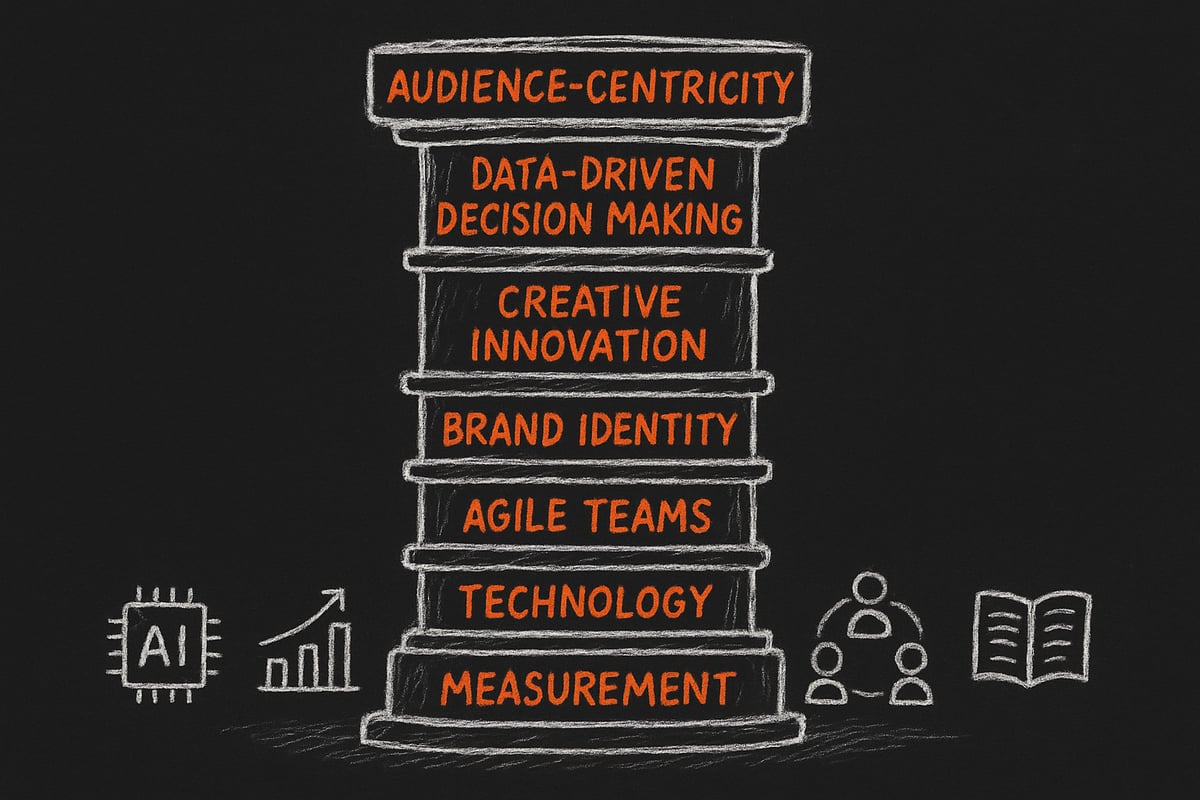
Audience-Centricity and Personalization
Understanding your audience remains the bedrock of every successful marketing and creative strategy. In 2026, brands will conduct deep research into customer psychographics, behaviors, and evolving needs.
Personalization engines will enable dynamic content, tailored offers, and real-time experiences across channels. For example, brands are leveraging AI to adjust website layouts or product recommendations based on user behavior instantly.
By prioritizing audience-centricity, you ensure that every marketing and creative initiative resonates and delivers value quickly.
Data-Driven Decision Making
Data is now the compass guiding all marketing and creative decisions. Leading brands analyze performance metrics, user insights, and market trends to optimize campaigns continuously.
A/B testing of creative assets, messaging, and channel tactics is standard practice. Top-performing content is regularly refreshed to stay relevant and impactful.
This pillar empowers teams to pivot quickly, ensuring that marketing and creative investments yield measurable results and stay ahead of competitors.
Creative Innovation and Experimentation
The pace of change in marketing and creative demands a culture of innovation. Experimenting with new formats, channels, and campaign styles fuels growth and differentiation.
Teams are encouraged to test unconventional approaches such as guerrilla marketing, interactive content, or public surprise activations. Cross-functional workshops and design thinking frameworks unlock fresh ideas.
For deeper insight into how agencies foster bold thinking, explore Creative Design Agencies Insights. Embracing creative risk is essential for breakthrough success.
Integrated Brand Identity and Messaging
A unified brand identity is the anchor for all marketing and creative efforts. Consistency in visual style, tone, and messaging across platforms increases recognition and trust.
Brands invest in graphic design systems, video storytelling, and interactive elements to stand out in crowded markets. Every touchpoint, from website to social, reflects the core brand narrative.
Strong integration ensures that marketing and creative initiatives reinforce each other, driving a cohesive brand experience.
Agile Team Structures and Collaboration
Agility is crucial for modern marketing and creative teams. Hybrid models blend in-house expertise with agency partnerships, allowing quick adaptation to new trends.
Regular creative workshops and open brainstorming sessions encourage collaboration across disciplines. Many teams now report higher creativity and productivity thanks to these agile structures.
Embracing flexible roles and transparent communication ensures that marketing and creative projects move swiftly from idea to execution.
Technology and Tools Enablement
Adopting the right technology stack supercharges marketing and creative output. AI-driven platforms automate content creation, personalization, and optimization.
Creative management tools streamline design, scaling, and publishing, freeing teams to focus on strategy and ideation. Investing in analytics and project management solutions ensures every campaign is data-informed.
Technology is the backbone that supports efficient and innovative marketing and creative work.
Measurement and Continuous Improvement
Setting clear KPIs is essential for tracking the impact of marketing and creative campaigns. Metrics such as revenue, engagement, reach, and conversions provide actionable insights.
Teams use dashboards and analytics platforms to monitor performance in real time. Regularly refreshing content and iterating campaigns based on data ensures ongoing improvement.
This commitment to measurement helps brands refine their marketing and creative strategies for lasting success.
Step-by-Step Guide: Building a Future-Proof Marketing & Creative Framework
Future-proofing your marketing and creative framework is essential for brands aiming to thrive in 2026. By following a structured, step-by-step approach, you can ensure your strategies are adaptable, data-driven, and innovative. Let us break down the process into six actionable stages.
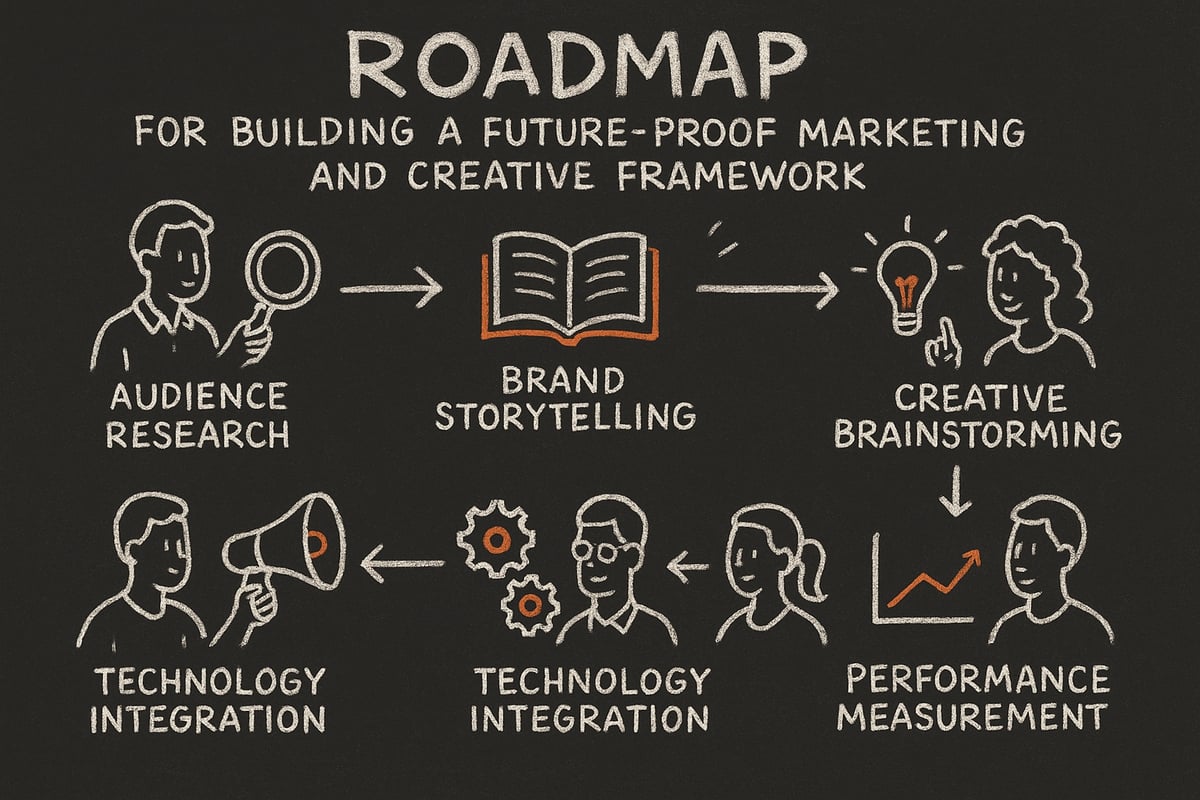
Step 1: Deep Audience Understanding and Segmentation
The foundation of any successful marketing and creative strategy is a profound understanding of your audience. Begin with both qualitative and quantitative research to uncover your customers’ motivations, pain points, and behaviors.
Develop detailed personas and map out customer journeys to visualize how different segments interact with your brand. Leverage social listening tools and analytics platforms to identify emerging trends and shifts in sentiment.
Segment your audiences based on psychographics, preferences, and real-time behavioral data. This enables you to personalize campaigns for maximum relevance and impact.
For instance, a brand that listens to audience feedback on social media can quickly pivot its messaging to address shifting needs. Creativity rooted in real insights ensures your marketing and creative initiatives resonate authentically and drive stronger connections.
Step 2: Define Brand Purpose, Story, and Visual Identity
Next, clarify your brand’s mission, vision, and core values. A strong sense of purpose is vital for guiding both marketing and creative decision-making.
Craft a compelling narrative that emotionally connects with your audience. This story should be woven consistently across all touchpoints, from website copy to advertising campaigns.
Establish a cohesive visual and verbal identity. This includes color schemes, typography, logo usage, and tone of voice. Consistency supports recognition and trust, both essential for long-term brand equity.
Brands that lean into storytelling foster deeper loyalty. For example, companies that share founders’ journeys or customer success stories often see higher engagement. A unified brand identity provides the creative foundation for all future marketing and creative efforts.
Step 3: Ideation and Creative Concept Development
Organize regular brainstorming sessions and creative workshops to fuel ideation. Encourage cross-functional teams to contribute, ensuring a mix of perspectives and expertise.
Apply frameworks like design thinking to structure the innovation process. Experiment with diverse formats such as video, podcasts, interactive content, or guerrilla marketing installations.
Originality is the heartbeat of memorable campaigns. Brands that dare to disrupt expectations often achieve virality and long-term recall. For practical guidance on blending design excellence with results-driven marketing, explore Marketing Designs That Convert.
Creative campaigns are statistically more likely to be shared and remembered. Emphasize boldness and risk-taking as part of your marketing and creative culture to maximize impact.
Step 4: Channel Strategy and Omnichannel Execution
Identify which platforms matter most to your target segments, whether web, mobile, social, or emerging formats like AR and VR. Build integrated campaigns that unify messaging and creative assets across all channels.
Tailor content formats to each platform. For instance, use short-form video for social media, interactive guides for web, and immersive experiences for AR. Such alignment ensures your marketing and creative efforts reach audiences where they are most engaged.
Unifying touchpoints delivers a seamless brand experience, maximizes reach, and drives higher engagement. Data shows that story-driven, interactive content can significantly increase virality. Omnichannel execution is crucial for brand cohesion and sustained growth.
Step 5: Technology, Tools, and Automation Integration
Select the right creative management platforms, analytics tools, and automation solutions to empower your teams. AI can streamline content creation, personalization, and optimization, freeing up time for high-value creative work.
Automate campaign management and reporting to increase efficiency. For example, creative management platforms (CMPs) enable real-time updates and scalable asset deployment across channels.
Technology is the backbone of modern marketing and creative operations. Investing in the right tools not only enhances productivity but also ensures your campaigns are responsive and relevant in a rapidly changing landscape.
Step 6: Measurement, KPIs, and Iteration
Set clear KPIs aligned with business objectives, such as revenue, engagement, reach, conversions, and site visits. Use real-time dashboards and analytics to monitor campaign performance and identify areas for improvement.
Make data-driven adjustments by regularly refreshing and optimizing your marketing and creative content. Brands that track ROI and iterate based on insights consistently outperform competitors.
KPIs should be actionable and realistic. Continuous measurement and refinement are essential for maintaining relevance and achieving long-term marketing and creative success in 2026.
Creative Marketing Tactics and Examples for 2026
In 2026, standing out requires mastering marketing and creative tactics that captivate, engage, and convert. The landscape is evolving rapidly, demanding brands to innovate across content, channels, and audience experiences.

Content Formats Driving Engagement
Modern marketing and creative strategies rely on a diverse mix of content formats. Blog posts, when SEO-optimized and regularly updated, remain a powerful tool for organic reach. Video content, especially short-form, live, and interactive formats, drives higher retention and shares across platforms. Podcasts and webinars allow brands to build authority and foster genuine audience connections.
Graphic design is crucial for establishing a consistent, memorable brand identity. Interactive content, such as quizzes, calculators, and AR experiences, encourages active participation and deeper engagement. Brands that adapt quickly to Top Trends to Watch in 2026 will outperform competitors by embracing emerging formats and technologies.
Personalization and Dynamic Content
Personalization is at the heart of effective marketing and creative campaigns in 2026. Brands leverage real-time data to adapt messaging, creative assets, and offers to individual preferences. Dynamic product recommendations and personalized experiences are now standard, especially in e-commerce.
For instance, AI-driven personalization engines present tailored content and promotions, significantly increasing conversion rates. The ability to adjust creative elements in real time ensures relevance and value for each user. This approach strengthens customer loyalty and keeps your marketing and creative efforts ahead of shifting expectations.
Social Media and Viral Campaigns
Social platforms remain essential for marketing and creative success. Brands maximize impact by tapping into trending topics, leveraging story formats, and encouraging user-generated content. Running contests, challenges, and campaigns tied to cultural moments amplifies reach and engagement.
User participation fuels virality, while well-timed campaigns using international days or popular hashtags can spark widespread attention. The most memorable marketing and creative campaigns are those that invite audiences to co-create and share, turning consumers into brand advocates.
Guerrilla and Experiential Marketing
Guerrilla tactics and experiential activations are powerful for generating buzz and brand recall. Unexpected campaigns in public spaces, such as pop-up installations or interactive events, grab attention and encourage social sharing. Integrating digital touchpoints, like AR filters or QR codes, bridges physical and online experiences.
Marketing and creative teams that take risks with surprise-and-delight stunts often see increased press coverage and organic reach. These campaigns are memorable because they disrupt routine and invite audiences into immersive brand experiences.
Data-Backed Creative Optimization
Marketing and creative strategies are most effective when grounded in data. A/B testing of visuals, copy, and calls to action reveals what resonates best with audiences. Regularly refreshing high-performing content keeps messaging relevant and sustains results.
Leading brands use analytics to track key metrics, refine creative assets, and maximize ROI. Consistent measurement and optimization ensure that marketing and creative investments deliver measurable business outcomes, keeping you ahead in a competitive landscape.
Cross-Industry Inspiration
Looking beyond your own field is a hallmark of innovative marketing and creative teams. Borrowing tactics from other industries, such as applying tech-inspired design in retail, can set your brand apart. This cross-pollination of ideas leads to fresh, unexpected campaigns that capture attention.
By embracing creative influences from diverse sectors, brands develop distinctive voices and strategies. This approach encourages originality and helps marketing and creative efforts break through industry noise.
Building and Empowering High-Performance Creative Teams
High-performing marketing and creative teams are essential for brands aiming to stand out in 2026. The most successful organizations focus on agility, diversity, and a culture that nurtures both innovation and accountability.
Structuring for Agility and Innovation
Choosing the right team structure is a strategic decision. In-house teams offer control and deep brand knowledge, while hybrid and agency models provide flexibility and specialized expertise. Many organizations are shifting toward cross-functional teams, blending marketing and creative skills for seamless ideation and execution.
A recent report shows that in-house teams increasingly report higher creativity and collaboration. Blending roles and responsibilities across marketing and creative functions enables brands to react quickly to market changes. For those building a strong creative foundation, exploring Branding and Graphic Design Services can help scale capabilities and ensure consistency.
Fostering a Culture of Creativity
A thriving marketing and creative culture requires more than just talent. Brands must actively encourage risk-taking, experimentation, and learning from failures. Regular workshops, creative sprints, and brainstorming sessions fuel idea generation and keep teams engaged.
Leaders who empower autonomy see more innovative campaigns. When individuals feel trusted to explore new concepts, the entire marketing and creative process becomes more dynamic and impactful.
Upskilling and Talent Development
Continuous learning is non-negotiable for marketing and creative excellence. Brands invest in training for both technical and soft skills, ensuring teams stay ahead of trends and technology. Bringing in external experts or agencies can provide fresh perspectives and fill skill gaps.
Hybrid teams that combine internal strengths with specialized partners often deliver the most effective marketing and creative outcomes. Ongoing education keeps talent motivated and ensures adaptability in a rapidly evolving landscape.
Collaboration and Communication Tools
Effective collaboration is the backbone of any high-performing marketing and creative team. Adopting the right project management and creative review platforms streamlines workflows, enhances transparency, and reduces bottlenecks.
Tools like digital whiteboards and creative management platforms enable real-time feedback and iteration. Open communication channels ensure everyone stays aligned, and creative ideas can flourish without unnecessary barriers.
Diversity and Inclusion as Creative Drivers
Diverse marketing and creative teams drive more resonant campaigns. Bringing together people with varied backgrounds, experiences, and perspectives leads to richer ideas and innovative problem-solving.
Inclusive environments unlock the full potential of every team member. Brands that prioritize diversity see tangible results, as their marketing and creative output better reflects and connects with global audiences.
Measuring Team Success and Impact
It is crucial to align marketing and creative team output with business objectives and KPIs. Using analytics to track campaign performance provides clear insights into what works and where to optimize.
Celebrating wins and learning from both successes and setbacks helps teams grow stronger. Data-driven measurement ensures that marketing and creative efforts are not only innovative but also deliver measurable impact.
Measuring Success: KPIs and Analytics for Creative Marketing
In 2026, success in marketing and creative efforts relies on clear measurement and actionable insights. Brands must set the right KPIs, use advanced analytics, and continuously refine their approach to drive growth. Let us explore how to measure what matters and future-proof your creative strategy.
Setting the Right KPIs for 2026
Choosing the right KPIs is crucial for aligning marketing and creative campaigns with business objectives. Metrics such as revenue, social engagement, organic traffic, and conversion rates provide a holistic view of impact. Referencing the 2026 Marketing Predictions Report can help you benchmark your metrics against industry trends and evolving budget allocations.
KPI | What it Measures |
|---|---|
Revenue from campaigns | Direct financial impact |
Social engagement | Audience interaction |
Organic search rankings | Visibility and authority |
Conversion rates | Effectiveness of messaging |
Clear KPIs keep teams focused and accountable.
Tools and Platforms for Measurement
The right technology stack empowers teams to track marketing and creative performance in real time. Analytics dashboards, attribution modeling, and integrated reporting platforms are essential. Many brands leverage tools highlighted in the 2026 Digital Advertising Trends Report to connect creative outputs with campaign results, especially as AI and video content drive new engagement patterns.
Popular tools include:
Google Analytics for traffic and conversion
Social media analytics suites
Creative management platforms with built-in reporting
These platforms enable data-driven decisions at every stage.
Interpreting and Acting on Data
Collecting data is only the first step. Teams must analyze results to determine which marketing and creative elements are driving performance. Moving beyond vanity metrics, focus on actionable insights that inform campaign adjustments. For instance, A/B testing visuals or messaging can reveal what truly resonates with your audience.
Regular reviews help identify top-performing assets and areas for improvement.
Continuous Improvement and Content Refresh Cycles
Sustained success in marketing and creative requires an iterative approach. Top brands routinely update content based on performance data, ensuring relevance and engagement stay high. Industry data shows that top-performing content is refreshed at least every two years, supporting ongoing growth.
Schedule regular audits and refresh cycles to keep your campaigns effective and aligned with changing trends.
Avoiding Common Measurement Pitfalls
Not all metrics are equally useful. Avoid focusing on numbers that your team cannot influence, such as impressions without engagement. Instead, concentrate on KPIs that tie directly to marketing and creative goals, like conversions or shares.
Common pitfalls include:
Tracking too many metrics at once
Relying on vanity metrics
Setting unrealistic targets
Stay focused on what truly matters to your brand’s growth.
Success Stories and Benchmarks
Measuring marketing and creative success means learning from industry benchmarks and real-world examples. Case studies often reveal how brands achieved viral reach or significant sales through effective creative campaigns. Use these stories to inspire your team and set realistic, data-driven goals for 2026.
Benchmarks allow you to compare your progress and celebrate meaningful wins.
As you look ahead to 2026, it’s clear that success will belong to brands that blend creative innovation with data-driven marketing. You’ve just explored actionable strategies and real-world examples designed to help you stand out in a crowded digital landscape, connect authentically with your audience, and drive measurable growth. If you’re ready to put these insights into action and want expert guidance tailored to your goals, I invite you to Book a free strategy call. Let’s work together to shape a marketing approach that sets your brand apart and propels you forward.

Nik Paprocki
Director of Digital Strategy at WebSuitable
[ Blog ]