Dec 18, 2025
Content
7 Essential Ecommerce Web Development Firm Strategies for 2026
Is your business prepared for the rapid changes shaping ecommerce by 2026? As digital transformation accelerates, every ecommerce web development firm faces new challenges and opportunities. This article uncovers seven essential strategies that will define success for firms aiming to lead the market. Learn how to leverage AI, embrace headless commerce, deliver seamless omnichannel experiences, and prioritize security and sustainability. Discover practical tactics, future-focused insights, and proven methods to help your ecommerce web development firm stay ahead of the competition and drive meaningful growth in the coming years.
The 2026 Ecommerce Web Development Landscape
The ecommerce landscape in 2026 will be shaped by rapidly evolving customer needs, emerging technologies, tighter regulations, and growing competition. For every ecommerce web development firm, understanding and adapting to these shifts is critical for long-term success.

Rising Customer Expectations and Digital Behaviors
Today’s consumers expect seamless, lightning-fast, and highly personalized shopping experiences. By 2026, these expectations will intensify as mobile commerce and voice-driven shopping continue to dominate. Research shows that 73% of customers now expect companies to understand their unique needs. For an ecommerce web development firm, delivering on these expectations means mastering UX design, optimizing for mobile, and ensuring every digital touchpoint feels intuitive and relevant.
Mobile-first design
Voice commerce integration
Hyper-personalized recommendations
Meeting these demands will set firms apart in a crowded marketplace.
Impact of Emerging Technologies
Artificial intelligence, augmented reality, and automation are revolutionizing ecommerce. By 2026, 83% of businesses plan to invest in AI-driven solutions, signaling a major shift in how brands interact with customers. An ecommerce web development firm must stay ahead by integrating these technologies to create immersive, efficient, and adaptive online stores. Tools like AI-powered chatbots, AR product previews, and automated fulfillment will become standard.
AI-driven personalization
AR/VR shopping experiences
Automated customer service
Firms that innovate will help clients stand out and scale.
Regulatory and Security Challenges
Stricter data privacy laws such as GDPR and CCPA are reshaping how ecommerce businesses operate. Alongside evolving regulations, cybersecurity threats are also on the rise. Every ecommerce web development firm must prioritize compliance and robust security protocols. This includes implementing SSL, firewalls, and regular vulnerability assessments. Clients now expect proactive risk management and transparent data practices.
Data privacy compliance
Multi-layered security
Ongoing threat monitoring
Proactive security builds trust and reduces risk.
Competitive Pressures and Market Saturation
The digital marketplace is more crowded than ever, with both global giants and niche brands competing for attention. For an ecommerce web development firm, differentiation is key. Firms must offer innovative solutions and exceptional customer experiences to help clients stand out. Innovation, agility, and a deep understanding of industry trends will be vital for maintaining a competitive edge.
Omnichannel experiences
Unique brand storytelling
Rapid feature deployment
Staying agile helps firms thrive amid saturation.
The Role of Ecommerce Web Development Firms
As strategic partners, ecommerce web development firms drive digital transformation for their clients. They balance technical execution with business outcomes, ensuring every project aligns with growth goals and future trends. To learn more about services and strategies shaping the industry, explore this Ecommerce website development company overview. By adapting to change and embracing innovation, firms secure their place at the forefront of ecommerce evolution.
7 Essential Ecommerce Web Development Firm Strategies for 2026
To thrive in the fast-paced world of ecommerce, every ecommerce web development firm must master a suite of forward-thinking strategies. These approaches are not just about keeping up—they are about leading the charge into 2026 and beyond. The following seven strategies are essential for any firm aiming to deliver measurable business impact and future-proof their clients' online presence.
1. Embrace AI-Driven Personalization
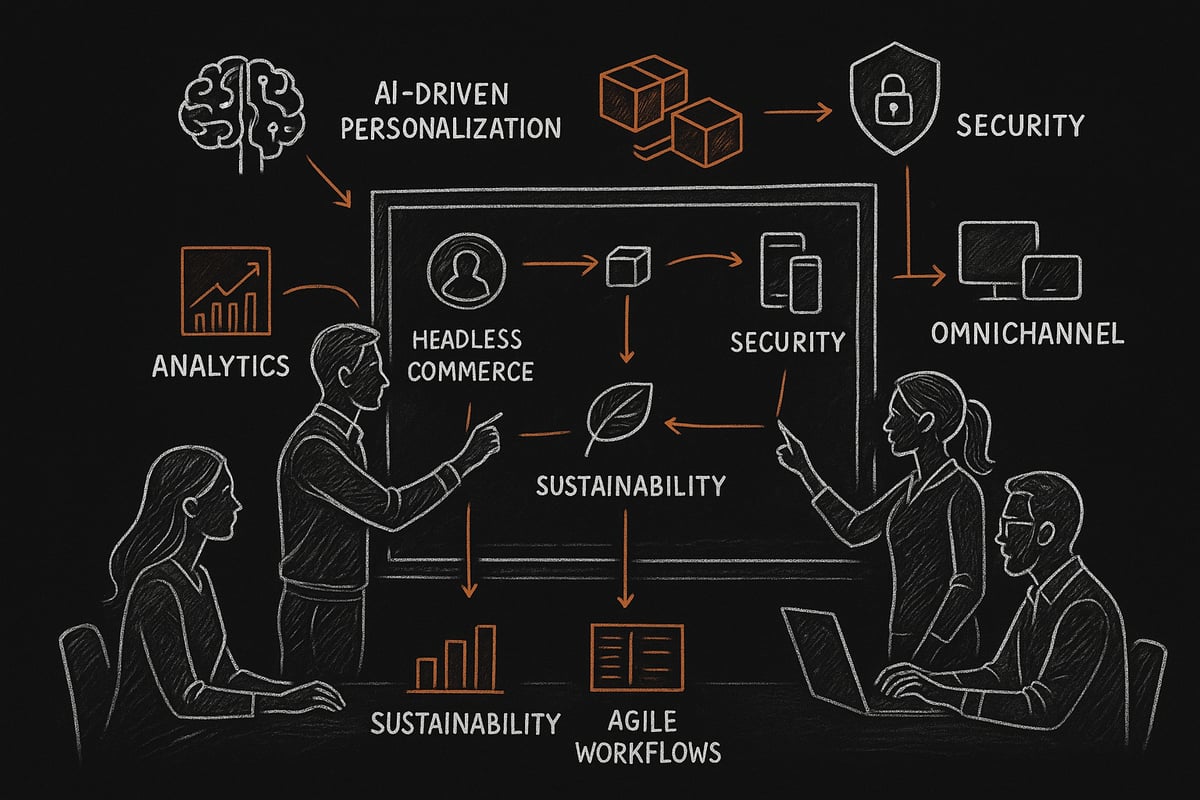
Personalization has become the cornerstone of successful ecommerce. By integrating artificial intelligence, an ecommerce web development firm can craft tailored shopping experiences that boost engagement and conversions.
Modern AI systems analyze real-time behavioral data, learning from every click and interaction. This enables dynamic content delivery—think product recommendations, predictive search, and personalized landing pages. For example, retailers leveraging AI-driven personalization have seen up to a 20% increase in conversions, demonstrating the tangible benefits of this approach.
Key tools include:
Predictive search algorithms
Chatbots for instant customer support
Automated upselling and cross-selling engines
However, AI integration also raises challenges. Data quality is critical; poor inputs undermine results. Privacy concerns must be addressed to build customer trust. Firms must ensure compliance with evolving regulations while maximizing the value of personalization.
Integrating AI with existing ecommerce platforms can seem daunting. Start with modular AI tools that connect via APIs, allowing for gradual adoption. A robust ecommerce web development firm will stay ahead by constantly refining algorithms and data practices.
For deeper insights on how top agencies are leveraging AI, see Ecommerce web agency insights.
2. Adopt Headless and Composable Commerce Architectures
Traditional ecommerce platforms can restrict innovation. By adopting headless and composable commerce architectures, an ecommerce web development firm gains flexibility and adaptability.
Headless commerce decouples the frontend from the backend. Developers can deliver seamless experiences across web, mobile, IoT, and even in-store devices. This agility is crucial as omnichannel becomes the standard. Brands using headless commerce report launching updates up to three times faster, gaining a real competitive edge.
Benefits include:
Faster time-to-market for new features
Improved scalability for growing businesses
Future-proofing against tech changes
Implementing headless solutions requires careful platform and API selection. Firms must balance initial complexity and investment with long-term gains. Composable commerce takes this further, allowing firms to assemble best-of-breed components tailored to each client.
A successful ecommerce web development firm will guide clients through architecture choices, integration planning, and ongoing optimization.
3. Prioritize Advanced Security and Compliance
Security is non-negotiable in today's ecommerce landscape. With rising cyber threats and stricter regulations, an ecommerce web development firm must prioritize multi-layered security and automated compliance.
Best practices include:
Implementing SSL certificates and advanced firewalls
Conducting regular vulnerability assessments and penetration tests
Leveraging AI-driven threat detection
Compliance is equally vital. Automated tools help firms stay ahead of evolving privacy laws like GDPR and CCPA. Teams should be trained continuously in security protocols and incident response.
A staggering 60% of small ecommerce businesses face cyberattacks each year. Failing to address these risks can devastate both firms and their clients. By proactively investing in security, an ecommerce web development firm safeguards brand reputation and customer trust.
4. Deliver Seamless Omnichannel Experiences
Customers expect consistency, whether shopping online, on mobile, or in-store. To meet these expectations, an ecommerce web development firm must integrate inventory, customer data, and order management across all channels.
Unified systems allow for:
Real-time inventory updates
Consistent branding and UX across platforms
Personalized recommendations at every touchpoint
APIs and cloud-based platforms make these integrations possible. Overcoming data silos is a common challenge, but the payoff is significant—omnichannel shoppers have a 30% higher lifetime value.
Personalization should extend across the entire journey. By delivering a seamless experience, an ecommerce web development firm helps clients maximize customer retention and satisfaction.
5. Leverage Data-Driven Optimization and Analytics
Data is the foundation of continuous improvement. An ecommerce web development firm must implement robust analytics to monitor user behavior, sales funnels, and conversion rates.
Key strategies:
Use A/B testing to refine UX and increase ROI
Automate reporting for actionable insights
Integrate analytics with marketing and CRM tools
Data-driven companies are 23 times more likely to acquire customers. However, privacy and ethical considerations must guide data collection and usage.
A sample analytics dashboard might include:
Metric | Pre-Optimization | Post-Optimization |
|---|---|---|
Conversion Rate | 2.5% | 3.1% |
Avg. Order Value | $70 | $82 |
Page Load Time (sec) | 3.2 | 1.7 |
By constantly iterating based on data, an ecommerce web development firm ensures ongoing growth and client success.
6. Champion Sustainable and Accessible Web Development
Sustainability and accessibility are now business imperatives. An ecommerce web development firm should build eco-friendly websites and ensure digital inclusion.
Sustainable practices include:
Optimizing images and reducing code bloat
Using green hosting providers
Measuring and reporting carbon footprint
Accessibility goes hand-in-hand. WCAG-compliant design ensures everyone can use the site, regardless of ability. Inclusive practices future-proof sites against regulatory changes and expand the customer base.
A recent survey found that 70% of consumers prefer brands committed to sustainability. By championing these values, an ecommerce web development firm builds trust and long-term loyalty.
7. Accelerate Innovation with Agile and Collaborative Workflows
Innovation thrives in agile environments. An ecommerce web development firm should adopt agile methodologies for rapid prototyping and continuous delivery.
Core elements:
Cross-functional teams blending design, development, and marketing
Regular feedback loops and sprint reviews
Use of project management tools for transparency
Agile teams deliver projects 37% faster, responding quickly to market changes. However, speed must be balanced with rigorous quality assurance.
Encouraging a culture of experimentation and learning enables an ecommerce web development firm to stay ahead of industry trends and consistently exceed client expectations.
The Role of Strategic Partnerships in Ecommerce Growth
Strategic partnerships are a driving force behind the growth and resilience of any ecommerce web development firm. As the digital commerce landscape becomes more complex, forming the right alliances is essential for innovation, scalability, and staying ahead of competitors.

Collaborating with Technology Providers
For an ecommerce web development firm, partnering with technology providers such as SaaS, PaaS, and cloud vendors unlocks access to best-in-class solutions. These collaborations enable firms to leverage advanced tools, seamless integrations, and rapid deployment of new features.
Consider how integrating platforms like Shopify or Salesforce can streamline workflows and enhance client offerings. By staying current with Ecommerce design agency best practices, firms position themselves to deliver superior UX/UI and omnichannel experiences.
Such partnerships also support scalability, security, and ongoing technical support, empowering firms to address evolving client needs.
Value of Agency-Client Partnerships
Long-term, transparent relationships between an ecommerce web development firm and its clients are crucial for sustainable growth. Co-creating strategies ensures that business goals align with technical execution, leading to more impactful digital transformation.
These partnerships foster open communication, allowing for quick adaptation to market shifts. Clients benefit from proactive guidance, while firms gain deeper insights into industry-specific challenges, enabling tailored solutions that drive measurable results.
Outsourcing vs. In-House Development
Choosing between outsourcing and in-house development is a pivotal decision for any ecommerce web development firm. Outsourcing can provide access to specialized skills, reduce time-to-market, and lower operational costs.
However, maintaining quality and ensuring alignment with brand values are vital considerations. In-house teams offer better control and a deeper understanding of company culture, but may require greater investment in training and resources.
Evaluating project requirements, budget, and long-term objectives helps determine the optimal approach.
Building Ecosystems for Scalable Solutions
Building robust ecosystems through strategic partnerships allows an ecommerce web development firm to offer scalable, future-ready solutions. Tapping into partner networks for integrations, plugins, and technical support enhances platform flexibility and client satisfaction.
Case studies show that multi-vendor ecosystems drive innovation and efficiency. By fostering collaborative environments, firms can adapt quickly to emerging trends and deliver integrated experiences that set them apart in a crowded market.
Measuring Success: KPIs and Continuous Improvement
Tracking the right metrics is vital for any ecommerce web development firm aiming to deliver impactful results. By focusing on measurable outcomes, firms can ensure ongoing growth, client satisfaction, and competitive advantage.
Key Performance Indicators for Ecommerce Web Development Firms
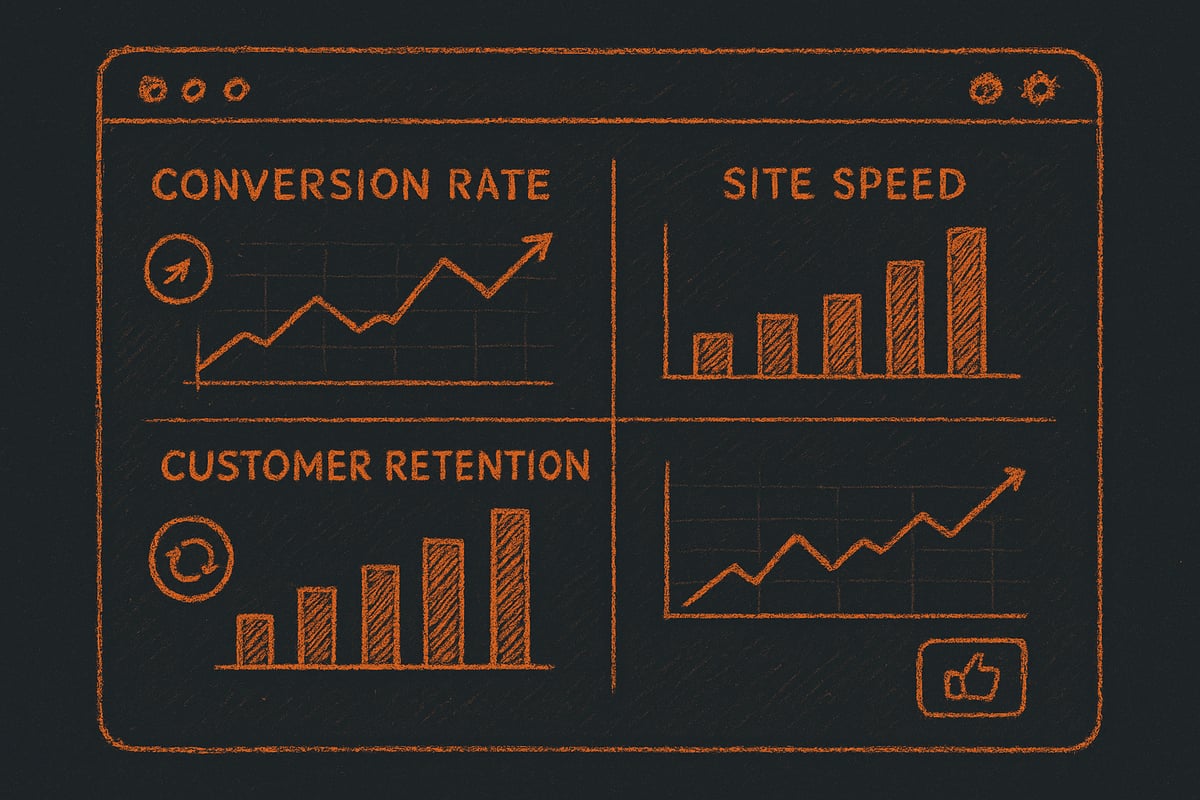
Choosing the right KPIs is crucial for every ecommerce web development firm. These indicators help teams measure the effectiveness of their solutions and identify areas for improvement.
Table: Essential KPIs for Ecommerce Web Development Firms
KPI | Description | Why It Matters |
|---|---|---|
Conversion Rate | Percentage of visitors who make a purchase | Directly impacts revenue |
Average Order Value | Average spend per transaction | Boosts profitability |
Customer Retention Rate | Percentage of repeat customers | Indicates loyalty |
Site Speed | Time to load pages | Affects user experience |
A one-second delay in site speed can reduce conversions by 7 percent, highlighting the need for precise tracking. By monitoring these KPIs, an ecommerce web development firm can align technical improvements with business goals.
Setting Benchmarks and Tracking Progress
Establishing benchmarks allows an ecommerce web development firm to set clear performance targets. Begin by recording baseline metrics before any new implementation.
Use dashboards and automated reporting tools to monitor progress in real time. Comparing post-implementation data to initial benchmarks reveals the true impact of changes.
For example, tracking conversion rates before and after launching a new feature provides valuable insights. Setting specific, measurable goals ensures accountability and transparency within the team.
Continuous Improvement Cycles
Continuous improvement is at the heart of every successful ecommerce web development firm. Regular audits, user feedback, and iterative enhancements keep solutions relevant and effective.
Techniques like A/B testing and user testing help refine user experience. By analyzing results, firms can make data-driven decisions for ongoing optimization.
Leveraging advanced analytics and AI-driven personalization in ecommerce further enhances the effectiveness of these cycles. This approach supports higher customer satisfaction and retention over time.
Learning from Industry Leaders
Studying case studies and competitor benchmarks empowers an ecommerce web development firm to stay ahead. Industry leaders often share best practices and lessons learned from real-world projects.
Staying updated with emerging trends, attending conferences, and engaging with professional communities are essential strategies. By adopting proven tactics from top performers, a firm can drive innovation and maintain a competitive edge.
Regularly evaluating performance against industry standards ensures the firm continues to deliver value and adapt to changing market demands.
Future Trends and Opportunities in Ecommerce Web Development
The future is unfolding rapidly for every ecommerce web development firm. As we approach 2026, emerging trends are reshaping what it means to innovate, compete, and deliver value online. From smarter automation to immersive experiences, the landscape is brimming with opportunity. Firms that embrace these shifts will be well-positioned to lead.
AI and Automation Evolution
Artificial intelligence is redefining how an ecommerce web development firm operates. Next-generation AI brings hyper-personalization, analyzing customer data to predict needs and tailor experiences in real time. Predictive analytics drive smarter decision-making, while automation streamlines repetitive tasks, freeing teams for creative problem-solving.
For instance, automated chatbots and recommendation engines now deliver instant, relevant support. As AI technology matures, firms will need to integrate these solutions seamlessly to stay ahead. Investing in AI is no longer optional, but essential for any ecommerce web development firm aiming for long-term growth.
The Rise of AR/VR and Immersive Commerce
Augmented and virtual reality are transforming the digital shopping journey. Features like virtual try-ons, 3D product views, and interactive showrooms are quickly becoming customer expectations. By 2026, nearly 40 percent of Gen Z shoppers will expect AR capabilities when buying online.
To meet these demands, an ecommerce web development firm must adopt tools that create engaging, immersive experiences. Using Progressive Web Apps in Ecommerce, firms can deliver app-like performance that supports rich media and AR features, improving both engagement and mobile conversions.
Blockchain and Decentralized Commerce
Blockchain technology is unlocking new opportunities for transparency and security in ecommerce. Decentralized platforms enable secure, tamper-proof transactions and offer customers greater control over their data. For an ecommerce web development firm, integrating blockchain means supporting payment with cryptocurrencies, NFTs, and transparent supply chain tracking.
This shift opens the door to innovative business models and builds trust with users wary of traditional systems. As clients seek advanced solutions, firms that understand blockchain will have a distinct competitive edge.
The Expanding Role of Sustainability and Ethics
Sustainability is no longer a trend, but a mandate for every ecommerce web development firm. Eco-friendly design practices, energy-efficient hosting, and ethical AI are becoming standard requirements. Consumers increasingly favor brands with clear sustainability commitments, demanding transparency in both environmental impact and data privacy.
To stay ahead, firms must adopt Sustainable Ecommerce Practices, ensuring websites are accessible and green. Ethical considerations, like inclusive design and responsible data handling, will be at the forefront of digital strategy by 2026.
Preparing for the Unknown
The only constant in ecommerce is change. Scenario planning and adaptability are essential for any ecommerce web development firm preparing for future disruptions. Investing in talent, research, and continuous learning will ensure teams can pivot quickly when new technologies or regulations emerge.
Building a culture of innovation, where experimentation is encouraged, helps firms not just react but anticipate what comes next. Those who remain proactive will shape the future of ecommerce, rather than simply respond to it.
As you look ahead to 2026, staying ahead in ecommerce means embracing innovation—from AI-driven personalization to secure, seamless omnichannel experiences. If you’re ready to turn these strategies into measurable growth for your business, let’s connect. At WebSuitable, we specialize in crafting custom web solutions that elevate your brand and deliver results. Whether you want to optimize your site, strengthen your digital presence, or plan for the future, I’m here to help you navigate the next steps with confidence.
Book a free strategy call and let’s build your ecommerce advantage together.

Nik Paprocki
Director of Digital Strategy at WebSuitable
[ Blog ]