Dec 6, 2025
Content
UX Design and Marketing Guide: Strategies for 2026 Success
Did you know that by 2026, over 85% of customer interactions will be managed digitally, making the intersection of ux design and marketing more critical than ever? As businesses navigate rapid shifts in technology and consumer behavior, the ability to align these disciplines will define market leaders.
This guide delivers proven strategies to blend ux design and marketing for measurable business growth. We will explore how these fields have evolved, why their synergy matters, and what actionable steps you can take to optimize your digital presence.
Ready to gain a competitive edge? Let’s dive into the strategies shaping success in 2026.
The Evolution of UX Design and Marketing: 2020–2026
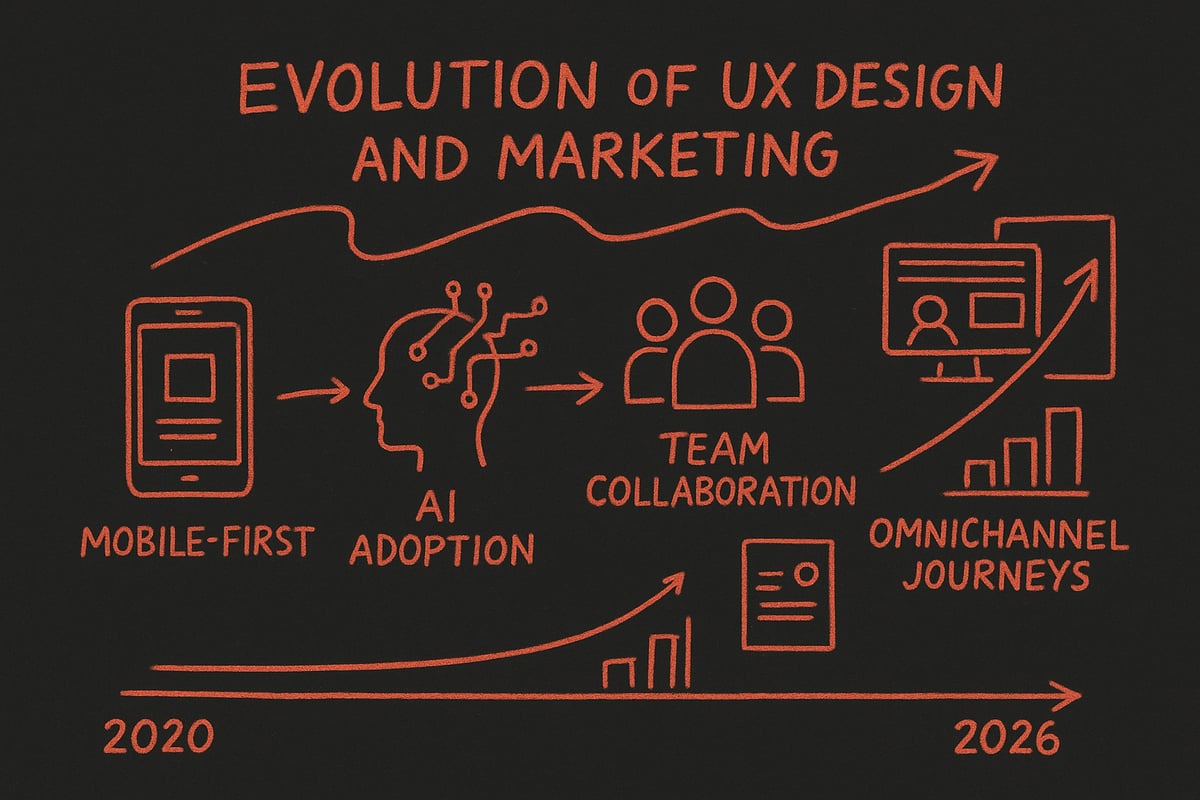
The landscape of ux design and marketing has undergone a dramatic transformation since 2020. Rapid digital advancements, changing consumer attitudes, and the integration of new technologies have shaped how brands connect with users. Understanding this evolution is crucial for businesses seeking to stay ahead in 2026.
Shifting Consumer Expectations and Digital Behaviors
Since 2020, digital transformation has accelerated at an unprecedented rate. Consumers now expect seamless, personalized experiences across every touchpoint. The rise of multi-device usage and omnichannel journeys has become the standard, and users interact with brands through smartphones, tablets, laptops, and even voice assistants.
Mobile-first browsing has surged, with over 60% of global website traffic coming from mobile devices by 2024 (Statista). Voice search is also gaining traction, driving demand for more intuitive and accessible interfaces. As a result, user engagement and retention are closely tied to the quality of ux design and marketing initiatives.
Digital Behavior | 2020 | 2026 (Projected) |
|---|---|---|
Mobile-first usage | 51% | 70%+ |
Voice search usage | 20% | 50%+ |
Omnichannel journeys | 35% | 60%+ |
Industry reports confirm that companies investing in integrated ux design and marketing see higher engagement rates and improved retention. For a deeper understanding of how these disciplines intersect, explore UX design and web design insights.
The Convergence of UX and Marketing Roles
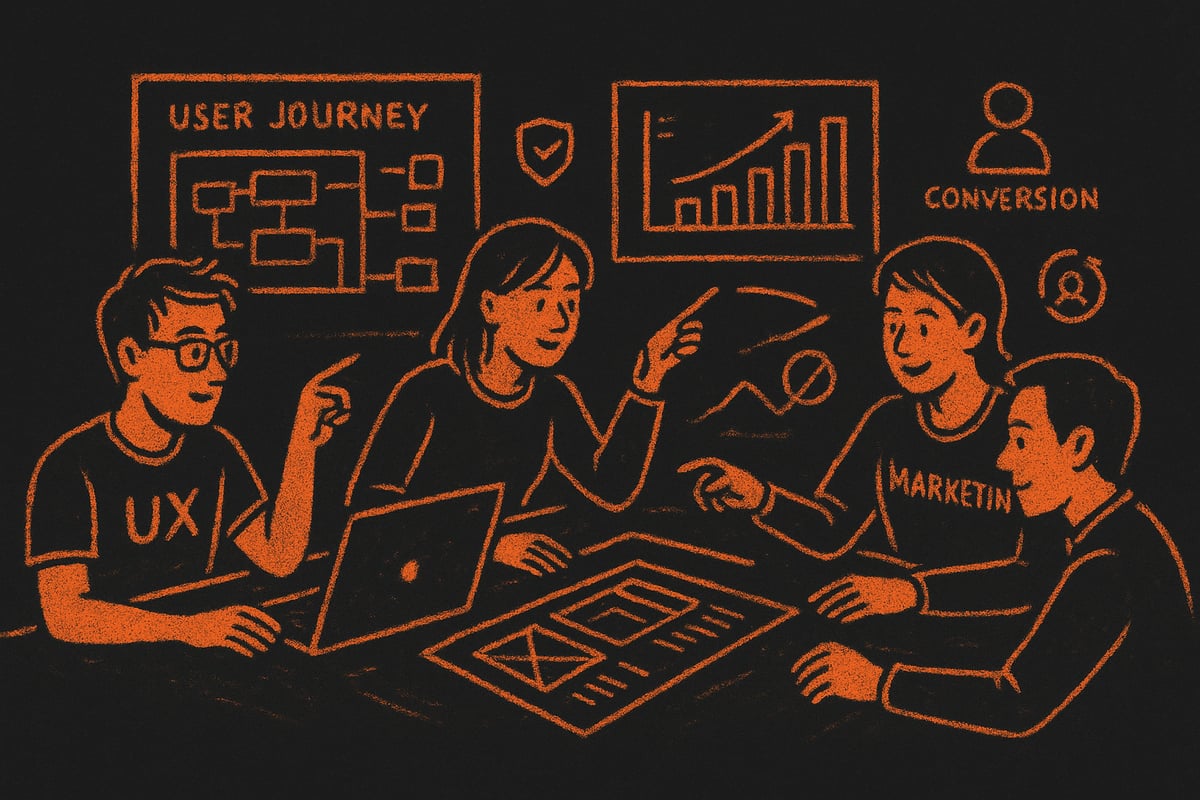
Traditionally, ux design and marketing teams operated in silos, leading to fragmented customer experiences. Today, organizations are breaking down these barriers, fostering cross-functional collaboration to deliver unified brand journeys. This convergence enables brands to use ux design and marketing as powerful drivers for customer acquisition and retention.
Examples of this shift include:
Companies restructuring teams to blend UX designers, marketers, and developers.
Joint workshops for campaign ideation and user journey mapping.
Shared KPIs that align both user satisfaction and marketing goals.
Industry leaders highlight how this collaborative approach leads to more cohesive strategies and measurable results. By integrating ux design and marketing, businesses can create campaigns that resonate deeply with users and drive loyalty.
Impact of AI and Automation
The adoption of AI and automation has redefined both ux design and marketing. AI-powered tools enable brands to personalize experiences at scale, analyze vast datasets, and automate repetitive tasks, all while maintaining a human-centered approach.
AI-driven chatbots now guide users through complex journeys, while predictive analytics help tailor content and offers in real time. Automation streamlines workflows, freeing teams to focus on strategy and creativity. However, technology should support, not replace, the empathy and insight at the heart of effective ux design and marketing.
Here is a simple workflow demonstrating the integration of AI tools:
By leveraging these innovations, organizations can deliver more relevant, engaging experiences, ensuring they remain competitive as expectations continue to evolve.
The Synergy Between UX Design and Marketing
The relationship between UX design and marketing has become a defining factor for digital success in 2026. When these disciplines work in tandem, organizations gain a clear edge in building trust, driving conversions, and fostering loyalty. Let us explore how a unified approach to ux design and marketing creates measurable impact across every customer touchpoint.
User-Centered Design as a Marketing Differentiator
Empathy-driven UX is now a core marketing asset. When brands prioritize user needs, they foster positive perceptions and set themselves apart in crowded markets. A well-crafted ux design and marketing strategy ensures every interaction builds trust, from the first ad click to post-purchase support.
Consider a retail brand that invests in intuitive navigation, clear messaging, and fast load times. The result is not just a better experience but also higher retention. In fact, brands with exceptional UX see up to a 400% increase in conversion rates compared to those with average experiences.
Key benefits of user-centered design:
Establishes credibility and trust
Increases customer loyalty
Drives positive word-of-mouth
To see how these principles translate into actionable steps, review marketing website design strategies that merge UX and marketing best practices.
Marketing Insights Fueling UX Decisions
Effective ux design and marketing integration relies on continuous data sharing. Marketers gather rich insights through campaigns, A/B tests, and audience segmentation. These findings should inform UX teams as they refine user journeys.
For example, a spike in bounce rate from a specific PPC campaign may indicate confusing navigation or irrelevant landing page content. By collaborating, teams can adjust layouts, messaging, or calls-to-action, leading to measurable improvements.
Data-driven feedback loops like these keep your design relevant and responsive to changing audience needs, ensuring your ux design and marketing approach remains agile.
Shared Tools and Metrics
UX and marketing teams often rely on the same analytics platforms to understand user behavior. Tools like Google Analytics, Hotjar, and heatmap software provide actionable data for both disciplines.
Common metrics tracked include:
Bounce rate
Conversion rate
Customer satisfaction
Time on site
By reviewing these metrics together, teams can quickly identify friction points and opportunities. For instance, heatmaps may reveal users ignoring a call-to-action, prompting both marketers and designers to optimize its placement. This shared toolkit strengthens the partnership between ux design and marketing.
Aligning Brand Messaging and User Experience
Consistency is key to building a recognizable brand. Every touchpoint, from advertisements to checkout pages, should reinforce your core message. UX writing and microcopy play an essential role in guiding users and supporting marketing goals.
A seamless narrative across channels reduces confusion and builds trust. For example, if an ad promises a quick sign-up, the landing page must deliver on that expectation with clear steps and reassuring copy.
By aligning brand messaging with user experience, you ensure that your ux design and marketing efforts are not working in silos but together to create a cohesive and memorable journey.
Essential UX and Marketing Strategies for 2026 Success
To thrive in 2026, businesses must align ux design and marketing with a focus on the user at every stage. This section shares proven strategies for combining creativity, technology, and data to drive measurable growth.

Personalization and Dynamic Content Delivery
Personalization is a cornerstone of modern ux design and marketing. In 2026, brands are leveraging AI and machine learning to deliver content tailored to individual user needs. Imagine visiting a retail site that instantly adjusts recommendations, banners, and messaging based on your browsing history and preferences.
Dynamic content delivery goes beyond static personalization. Real-time data enables businesses to serve the right message at the perfect moment. For example, e-commerce platforms now use predictive analytics to anticipate what users want before they even search.
This approach is not only about delighting users, but also about boosting engagement and retention. According to industry studies, websites with advanced personalization see up to 20% higher conversion rates than those with generic content.
AI is accelerating these changes. Tools that automate user segmentation and content adaptation are reshaping workflows, as described in AI's Impact on UX Design Practices. These technologies empower teams to deliver hyper-relevant experiences at scale, making ux design and marketing inseparable.
Omnichannel Experience Optimization
Today’s consumers interact with brands across multiple devices and channels. Omnichannel experience optimization ensures these interactions feel seamless, whether users are on a mobile app, desktop site, or in-store kiosk.
The key to success is mapping the entire customer journey. Businesses analyze each touchpoint to identify friction and streamline transitions. For instance, leading retailers synchronize online and in-store promotions, so users receive consistent offers regardless of where they shop.
A robust omnichannel strategy combines data from all platforms. By integrating analytics, teams can spot drop-off points and refine user flows. This approach enhances satisfaction and increases customer lifetime value, making it a vital part of ux design and marketing.
Here’s a quick comparison of single-channel vs. omnichannel approaches:
Feature | Single-Channel | Omnichannel |
|---|---|---|
Consistency | Low | High |
Personalization | Limited | Advanced |
Data Integration | Siloed | Unified |
With a focus on consistency, businesses using omnichannel strategies outperform competitors who treat each channel separately. As the digital landscape evolves, mastering omnichannel ux design and marketing is essential.
Conversion Rate Optimization (CRO) Through UX
Conversion rate optimization is a critical element of ux design and marketing. The goal is simple: reduce friction, guide users, and maximize the percentage of visitors who take desired actions.
Start by identifying pain points in your user flows. Are visitors abandoning their carts? Is your sign-up process too complex? Use A/B testing to compare different layouts, call-to-action buttons, and content placements.
Many top brands report significant gains by streamlining their checkout experiences. For example, reducing form fields and simplifying navigation often cuts cart abandonment rates by 30% or more.
Effective CRO is a continuous process. Teams must regularly review analytics, gather feedback, and iterate. By focusing on user experience, businesses create pathways that lead users from curiosity to conversion, reinforcing the impact of ux design and marketing.
Integrating SEO and UX for Visibility and Engagement
In 2026, integrating SEO with ux design and marketing is not optional—it is fundamental for growth. Search engines increasingly reward sites that deliver fast, mobile-optimized, and user-friendly experiences.
Technical SEO elements like site speed, mobile responsiveness, and structured data enhance both visibility and usability. When content satisfies both user intent and search algorithms, engagement rates climb.
For example, adding structured data can improve your site’s appearance in search results, making it easier for users to find what they need. Well-crafted content, paired with intuitive navigation, keeps visitors engaged and reduces bounce rates.
A unified approach means SEO and UX teams collaborate from the start. This alignment ensures that your digital presence attracts, retains, and converts users—a hallmark of effective ux design and marketing.
Data-Driven Decision Making
Data-driven decision making is the backbone of successful ux design and marketing. By harnessing analytics, teams gain insight into user preferences, behaviors, and pain points.
Continuous experimentation is key. Use A/B testing, heatmaps, and user feedback to refine strategies. Rapid prototyping enables quick adjustments, ensuring your digital experiences stay relevant.
Case studies show that iterative improvements, guided by real user data, result in higher ROI. For example, one SaaS company increased sign-ups by 18% after using analytics to identify and address a confusing onboarding step.
The cycle of measure, test, and iterate should be embedded in every workflow. This commitment to data ensures that ux design and marketing efforts remain agile and effective.
Accessibility and Inclusivity as Growth Drivers
Accessibility and inclusivity are more than compliance checkboxes—they are drivers of business growth. Designing for all users, regardless of ability, not only expands your audience but also demonstrates social responsibility.
Following standards like ADA and WCAG ensures your site is usable by everyone. This includes considerations for color contrast, keyboard navigation, and alternative text for images.
Brands that prioritize inclusive design often gain a competitive edge. Studies reveal that accessible websites reach up to 15% more users and foster greater loyalty.
By embedding accessibility into every stage of ux design and marketing, you future-proof your business and build trust with diverse audiences.
Implementing UX and Marketing Integration: Step-by-Step Guide
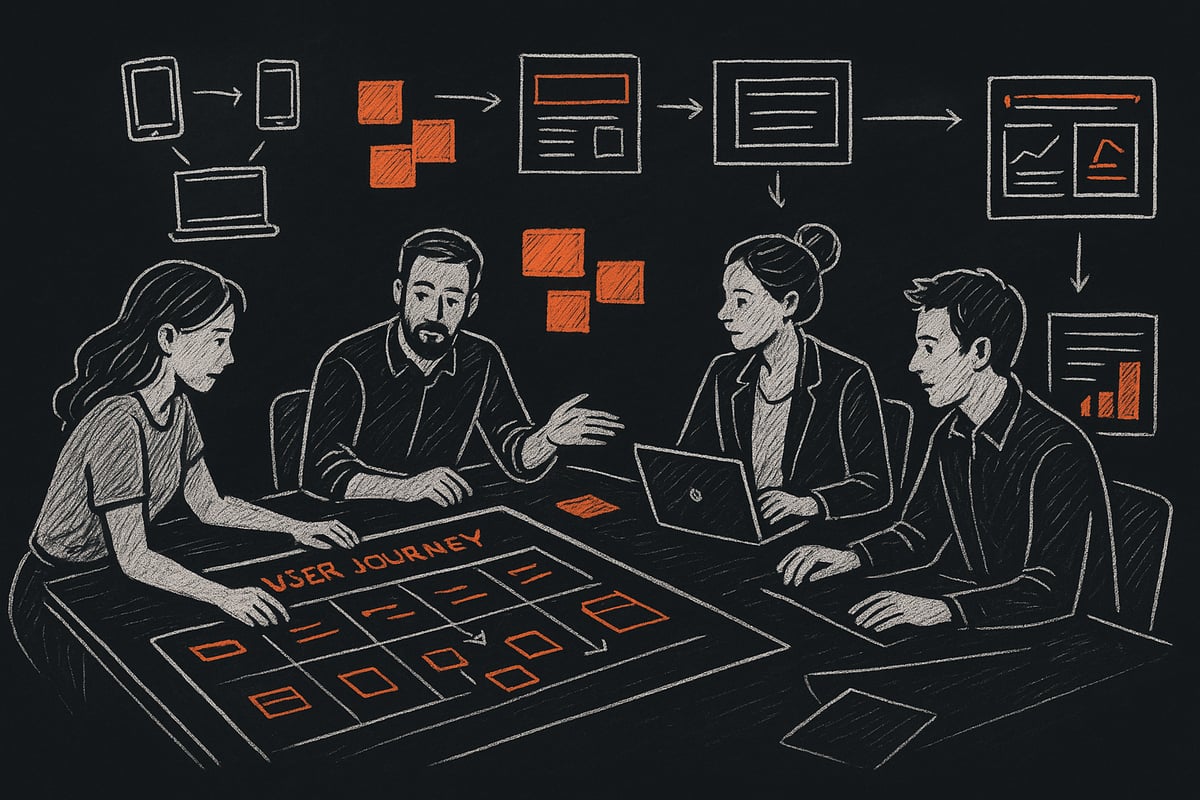
To successfully integrate ux design and marketing in 2026, organizations must adopt a structured, collaborative approach. This guide provides a clear, actionable path for teams aiming to align user experience and marketing efforts for measurable business impact.
Step 1: Establish Cross-Functional Teams
Begin by assembling teams that combine expertise in ux design and marketing, development, and analytics. Breaking down traditional silos ensures that every perspective is represented from project kickoff.
A typical cross-functional team includes:
UX/UI designers who focus on user flows and usability
Marketing strategists who align messaging and campaigns
Developers who bring designs to life
Data analysts who interpret user and market trends
Set shared goals and KPIs from the outset, such as engagement rates or conversion metrics. Hold weekly sprints with joint review sessions to foster transparency and agility.
For inspiration on effective team structures and collaboration, review this UI/UX design agencies overview, which highlights leading agencies excelling at integrated project delivery.
Step 2: Conduct Unified User and Market Research
Combine qualitative and quantitative research methods to gain a 360-degree view of your audience. Integrate insights from both ux design and marketing to create holistic user personas that reflect real behaviors and motivations.
Effective unified research includes:
Surveys and interviews for direct user feedback
Analytics from digital campaigns and website usage
Social listening to understand sentiment and trends
Workshops where marketing and UX teams align findings
By blending research sources, teams can identify meaningful patterns and inform both design and messaging decisions. This unified approach paves the way for more relevant, impactful experiences.
Step 3: Map and Optimize the Customer Journey
Identify all key touchpoints and pain points across the customer journey. Mapping the journey together ensures that ux design and marketing efforts are consistently aligned at every stage.
Start with a service blueprint to visualize interactions from initial awareness through post-purchase support. Focus on seamless transitions between channels, such as moving from an online ad to a mobile landing page, or from in-store engagement to follow-up emails.
Iteratively optimize these journeys by:
Conducting usability testing on critical paths
Reviewing analytics to spot drop-offs or friction
Coordinating messaging and design updates
This holistic approach drives customer satisfaction and increases retention.
Step 4: Develop and Test Prototypes Collaboratively
Host co-creation workshops where team members from ux design and marketing ideate and prototype solutions together. Use rapid prototyping tools to build interactive wireframes that can be evaluated by both teams.
Key actions for collaborative prototyping:
Joint brainstorming sessions to generate ideas
Quick development of clickable prototypes
Real user feedback sessions for early validation
Continuous testing and iteration allow teams to refine both the user experience and campaign elements before launch. Embracing this agile mindset helps teams adapt quickly to feedback and market shifts.
Step 5: Launch, Measure, and Iterate
Once your integrated solution goes live, define clear success metrics that reflect both ux design and marketing objectives. Track performance using real-time analytics, and establish a cadence for ongoing review and optimization.
Best practices include:
Setting up dashboards to monitor KPIs like bounce rate, conversion, and engagement
Running continuous A/B tests on landing pages and campaigns
Gathering user feedback to guide rapid improvements
Leverage automation and AI-driven insights for more efficient monitoring, as discussed in "AI's Role in Marketing and Business". This empowers teams to iterate faster and maximize ROI from integrated ux design and marketing strategies.
Future Trends: What’s Next for UX Design and Marketing in 2026?
The landscape of ux design and marketing is evolving rapidly as technology, consumer expectations, and industry standards shift. Looking to 2026, several future trends are poised to redefine how brands connect with users and drive business growth. Organizations that anticipate and adapt to these changes will gain a substantial competitive edge.
AI-Driven Hyper-Personalization
AI-driven hyper-personalization is set to become a cornerstone of ux design and marketing strategies. Predictive analytics now enable brands to anticipate user needs and deliver content tailored to individual preferences in real time.
Automated systems adjust layouts, product recommendations, and messaging based on behavior patterns. For example, e-commerce platforms curate dynamic homepages for each visitor, improving engagement and satisfaction. According to "AI's Influence on Usability and UX", AI is redefining usability and testing, making experiences more intuitive and relevant.
With these tools, ux design and marketing teams can scale personalization while maintaining efficiency. The challenge lies in balancing automation with authentic, human-centered experiences.
Voice, AR, and Immersive Experiences
Voice interfaces, augmented reality, and immersive experiences are transforming how users interact with brands. By 2026, voice search and smart assistants will be fully integrated into daily life, impacting ux design and marketing priorities.
Retailers are leveraging AR for virtual try-ons, while voice-driven navigation is streamlining user journeys. These technologies create new touchpoints, requiring teams to rethink content, accessibility, and conversion strategies.
As users expect seamless interactions across devices, integrating these experiences into ux design and marketing becomes essential for brand relevance and engagement.
Ethical Design and Data Privacy
The importance of ethical design and data privacy is increasing, shaping the future of ux design and marketing. Users demand transparency, control, and consent over personal data.
Brands must adopt clear privacy policies and implement user-friendly consent mechanisms. Balancing personalization with respect for privacy builds trust and long-term loyalty.
Regulations such as GDPR and CCPA are setting standards that influence design and marketing decisions. Proactive compliance helps organizations avoid risks and positions them as responsible leaders in the digital landscape.
The Rise of Micro-Interactions and Micro-Moments
Micro-interactions and micro-moments are gaining prominence in ux design and marketing. These subtle, focused interactions—like animated feedback or contextual tooltips—enhance user satisfaction and engagement.
Brands are using micro-moments to capture attention and guide decision-making, especially on mobile devices. For instance, a well-timed animation after a successful transaction reinforces positive feelings.
Integrating these details into ux design and marketing strategies helps create memorable experiences that differentiate brands in crowded markets.
Integration of AI Search and Conversational Interfaces
The integration of AI-powered search and conversational interfaces is reshaping ux design and marketing. Users now expect immediate, relevant responses through chatbots and voice assistants.
Optimizing content for conversational queries, such as natural language questions, is becoming a key priority. Preparing for AI-driven search engines like Google’s advanced assistants means rethinking keyword strategy and content structure.
This trend emphasizes the need for ux design and marketing teams to collaborate closely, ensuring discoverability and engagement across emerging platforms.
Continuous Learning and Upskilling for Teams
Continuous learning and upskilling are critical for keeping pace with the rapid evolution of ux design and marketing. Teams that invest in ongoing education stay ahead of emerging technologies and best practices.
Companies are offering training in AI, data analytics, and immersive design tools. This proactive approach empowers professionals to innovate and adapt to changing user needs.
Fostering a culture of learning ensures organizations remain agile, competitive, and ready to embrace future trends.
As you’ve seen, the path to success in 2026 is all about blending innovative UX design with strategic marketing—creating seamless, memorable experiences that truly set your brand apart. If you’re ready to put these proven strategies into action and want guidance tailored to your business, we’re here to help. Let’s uncover new opportunities for growth, refine your digital presence, and ensure your brand stands out in a rapidly evolving landscape. Take the next step and Book a free strategy call with our team. Together, we can shape the future of your brand’s success.

Nik Paprocki
Director of Digital Strategy at WebSuitable
[ Blog ]